Overview
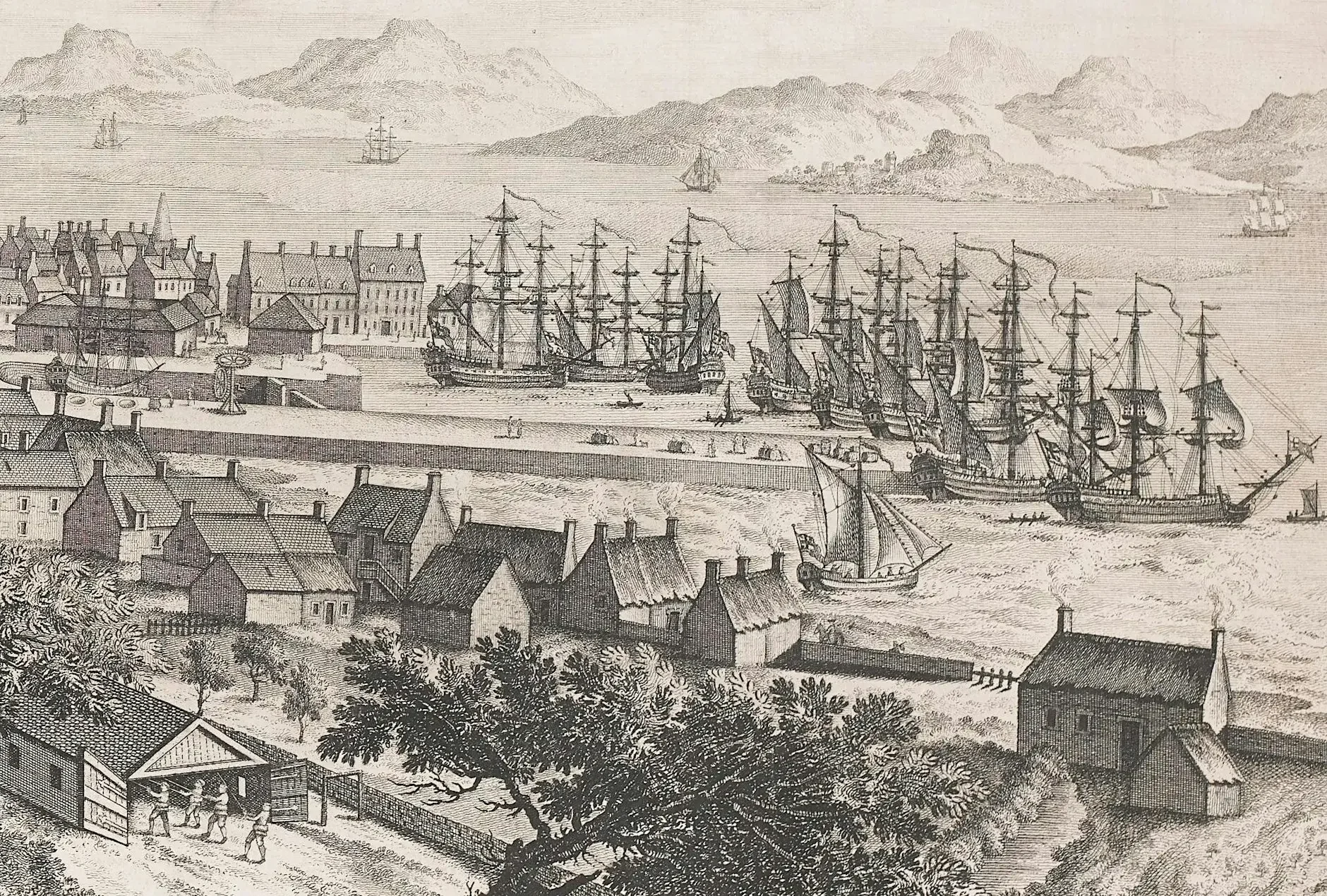
From 1668, Port Glasgow provided the deep-water harbour that Glasgow itself lacked, becoming the city’s principal gateway to the Atlantic.
Before it was improved in the 18th century, the river Clyde was too shallow to allow sea going vessels to reach Glasgow. From 1668, Port Glasgow provided the deep-water harbour that Glasgow itself lacked, becoming the city’s principal gateway to the Atlantic and, by the 18th century, a major centre for the tobacco, sugar and other colonial trades. The opening of the Forth & Clyde Canal to Hamiltonhill in 1777 created Glasgow’s first inland canal port, connecting the city directly with the wider trading world for the first time.
Fergus Sutherland originally trained as an archaeologist at Glasgow University but has spent most of the last four decades working as a heritage consultant and public historian. Although he has been involved in over four hundred projects throughout Britain, Europe and the Middle East, his primary love is the history of his adoptive city, Glasgow, the most fascinating place in the world (in his humble opinion!).